
Key takeaways
- Agricultural sizes are quoted on pitch (effective) length in inches — LB110 is not the same measurement basis as a classical B110.
- Farm duty is defined by shock loads, clutched engagement, variable-speed sheaves and long centre distances, not by steady-state horsepower.
- Suffixes in the catalogue name — Gold, New Orange, Cogged, 2R — identify the belt, not the size. Quote the whole code.
- If the old belt is destroyed, section comes from top width and depth; length comes from a measurement around the pulley path with the tensioner at mid travel.
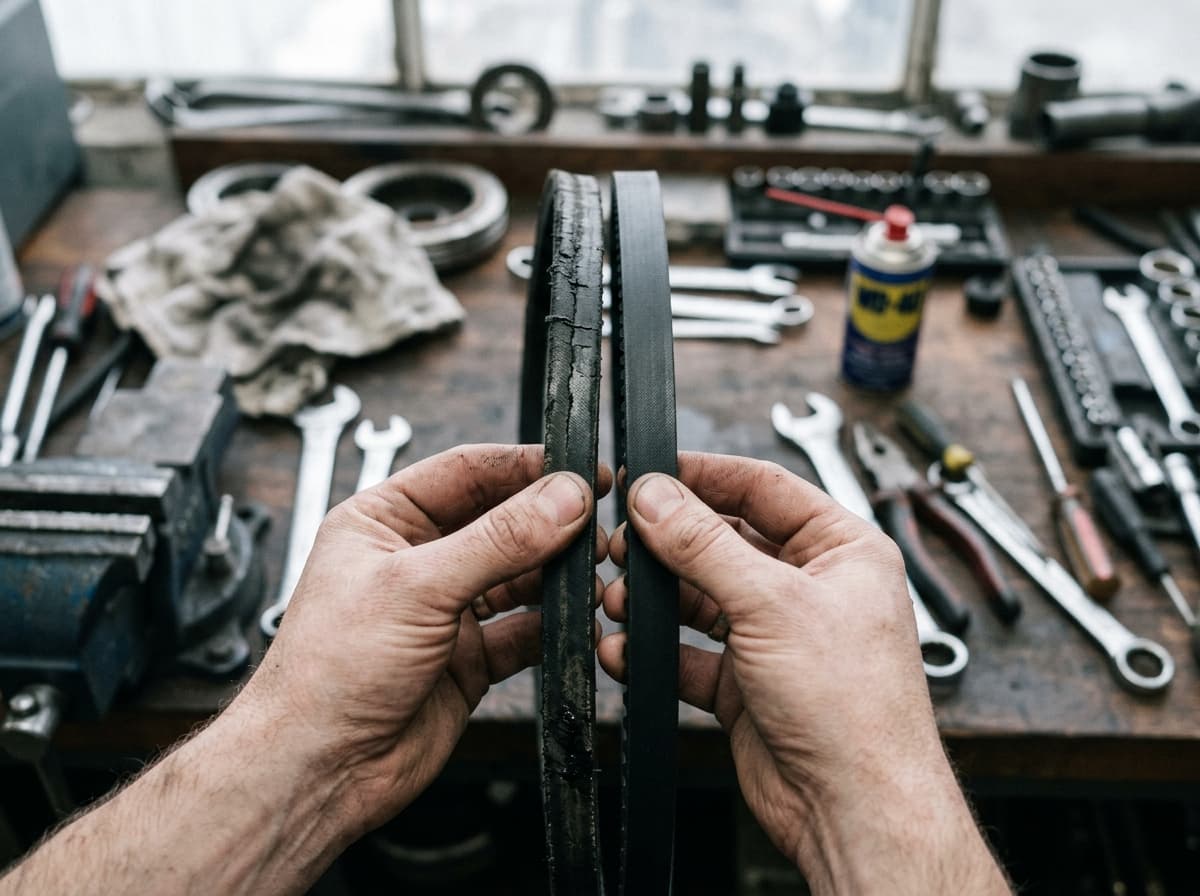
What changes when the drive is on a farm
A V-belt on a plant-room fan lives a predictable life. It starts once, runs at one speed, sits in shelter, and is loaded to a number an engineer calculated years ago. A V-belt on a header, baler or mower lives the opposite life, and almost every design decision in an agricultural belt follows from that difference.
Shock loading. Crop does not arrive at a constant rate. A slug through the feeder house, a wet windrow, a rock in the pick-up — the load spikes far above average, and it spikes in milliseconds. The belt has to absorb that without the cord line stretching permanently, because a belt that has taken a set no longer holds tension and starts to slip on every subsequent surge.
Clutched engagement. On many farm drives the belt is the clutch: an idler swings in to tension the span and the drive engages, then swings out and the belt runs slack. That means repeated transitions from zero to full load, plus reverse bending around a small idler pulley, plus the sidewall abuse of a belt that slips deliberately every time it engages.
Variable speed. Reel drives, fan drives and ground-speed drives use variable-pitch sheaves whose flanges move in and out. The belt runs at a changing pitch diameter, is squeezed hard between the flanges, and has to keep its shape while doing it. Wide-section belting for this duty is built for transverse rigidity so it does not collapse or dish under the clamping load.
Long centre distances. Farm machines put drives wherever there is room, which frequently means metres of unsupported span. Long spans whip, and whipping fatigues the cord and hammers the pulley grooves. High-modulus cord and correctly positioned idlers are the answer; more tension is not.
Environment and duty cycle. Dust, chaff, stubble, moisture, hydraulic oil, diesel, fertiliser and Australian UV — then ten months parked in an open shed. The cover has to resist abrasion and oil, and the compound has to resist ozone and set-cracking through a long idle period. Many belts that fail in the first hour of a season did not fail in that hour; they failed in the shed and only found out under load.
Agricultural vs industrial V-belts
| Agricultural (LA, LB, LC) | Industrial classical (A, B, C) | |
|---|---|---|
| Length basis | Pitch (effective) length, inches | Inside length, inches |
| Load profile | Shock and slug loading, constant surges | Broadly steady-state motor duty |
| Engagement | Often clutched by a swinging idler — the belt is the clutch | Permanently tensioned |
| Speed | Variable-pitch sheaves on many drives | Fixed ratio |
| Drive layout | Long centres, multiple and back-side idlers, non-planar runs | Short centres, two pulleys, one plane |
| Exposure | Dust, chaff, moisture, oil, fuel, UV | Sheltered or enclosed plant |
| Duty cycle | Seasonal — hard weeks, then months idle | Continuous or shift-based |
| Replacement window | Before the season, not during it | Scheduled or condition-based |
How agricultural belting differs from general-purpose industrial V-belts.
The cost of a belt is not the cost of a belt failure.
Reading LA, LB and LC size codes
Agricultural size codes in this catalogue are built the same way every time: section + nominal length in inches. An LB30 is an LB-section belt with a 30 inch nominal length; an LC140 is an LC-section belt at 140 inches. The letter after the L tracks the familiar cross-section families — LA follows A, LB follows B, LC follows C — so top width alone will usually tell you which of the three you are holding.
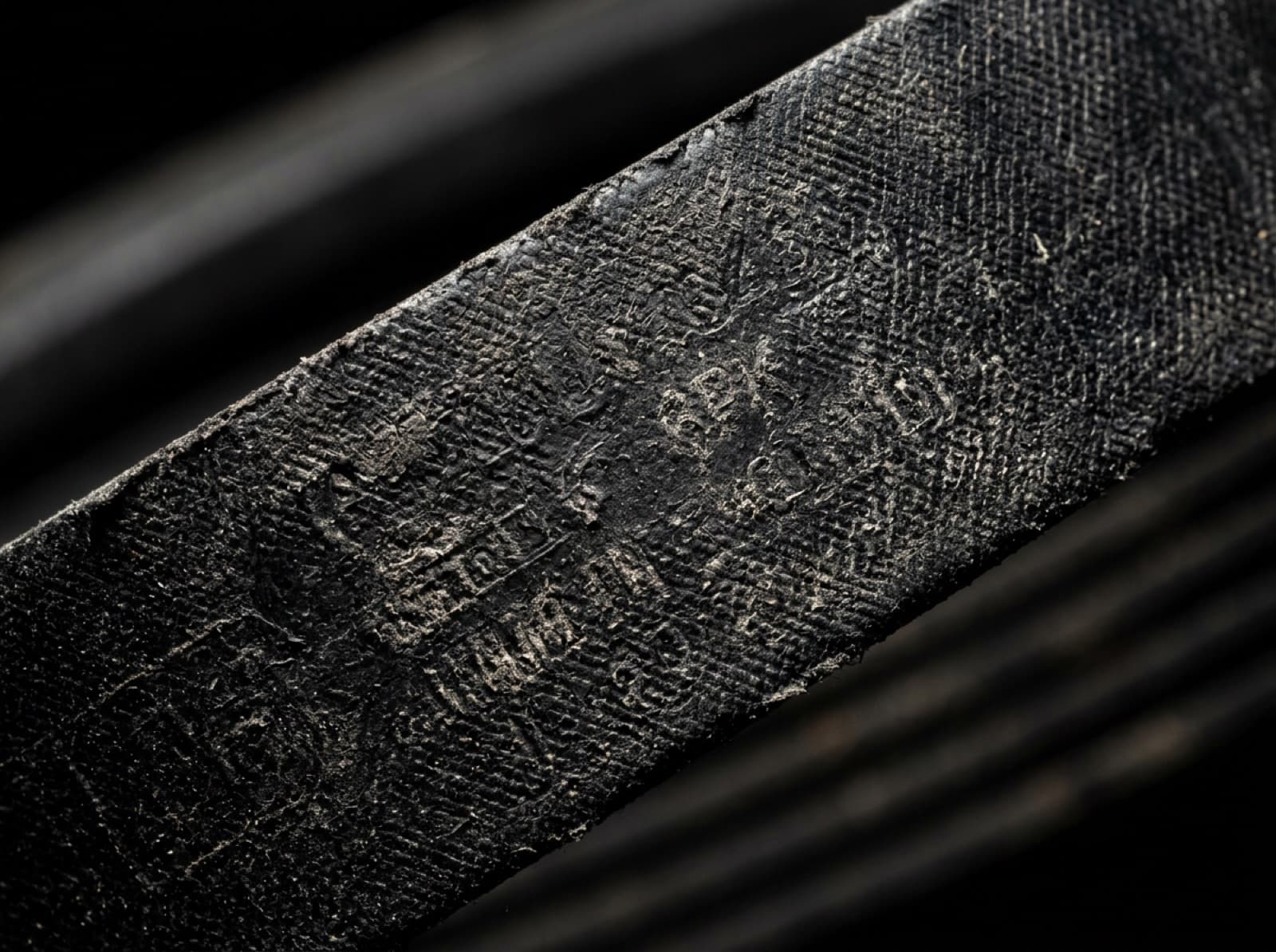
The trap is the length basis. Agricultural sizes are quoted on pitch (effective) length — the length measured at the belt's cord line — while classical industrial belts are quoted on inside length, measured around the inner surface. Those are different numbers for the same physical belt. Reading "110" off an old agricultural belt and ordering a B110 does not get you the same belt; it gets you a belt that is measurably short.
If the code on the old belt is a brand you do not recognise, the cross-reference guide walks through decoding it, and the size chart guide has the measured top widths for confirming a section with calipers.
Wrapped, raw-edge cogged, and what is inside
Wrapped belts carry a fabric cover all the way round. That cover is the reason wrapped construction stays dominant in agriculture: it takes abrasion from stubble and grit, tolerates the deliberate slip of a clutching engagement, resists oil and moisture ingress, and gives a consistent friction surface against the groove flanks. It is the sacrificial layer between the working part of the belt and a very unkind environment.
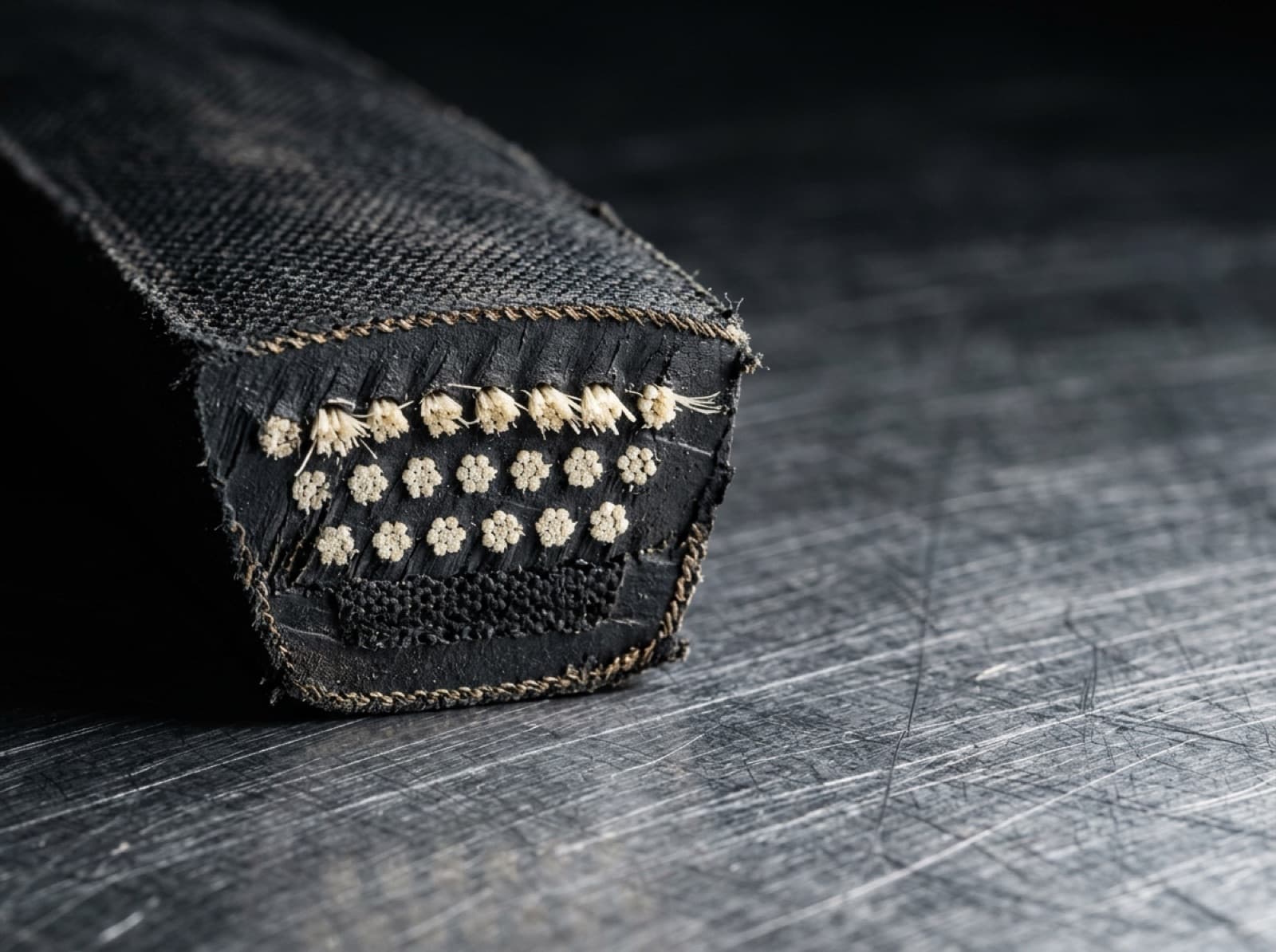
Raw-edge cogged belts trade the side cover for exposed, moulded flanks and a notched underside. The notches let the belt bend around small pulleys and idlers with less strain and less heat build-up, and the exposed flanks grip the groove harder. On drives with tight bend radii or high speeds that is a real advantage — which is why cogged variants appear in the agricultural range alongside plain wrapped belts rather than instead of them.
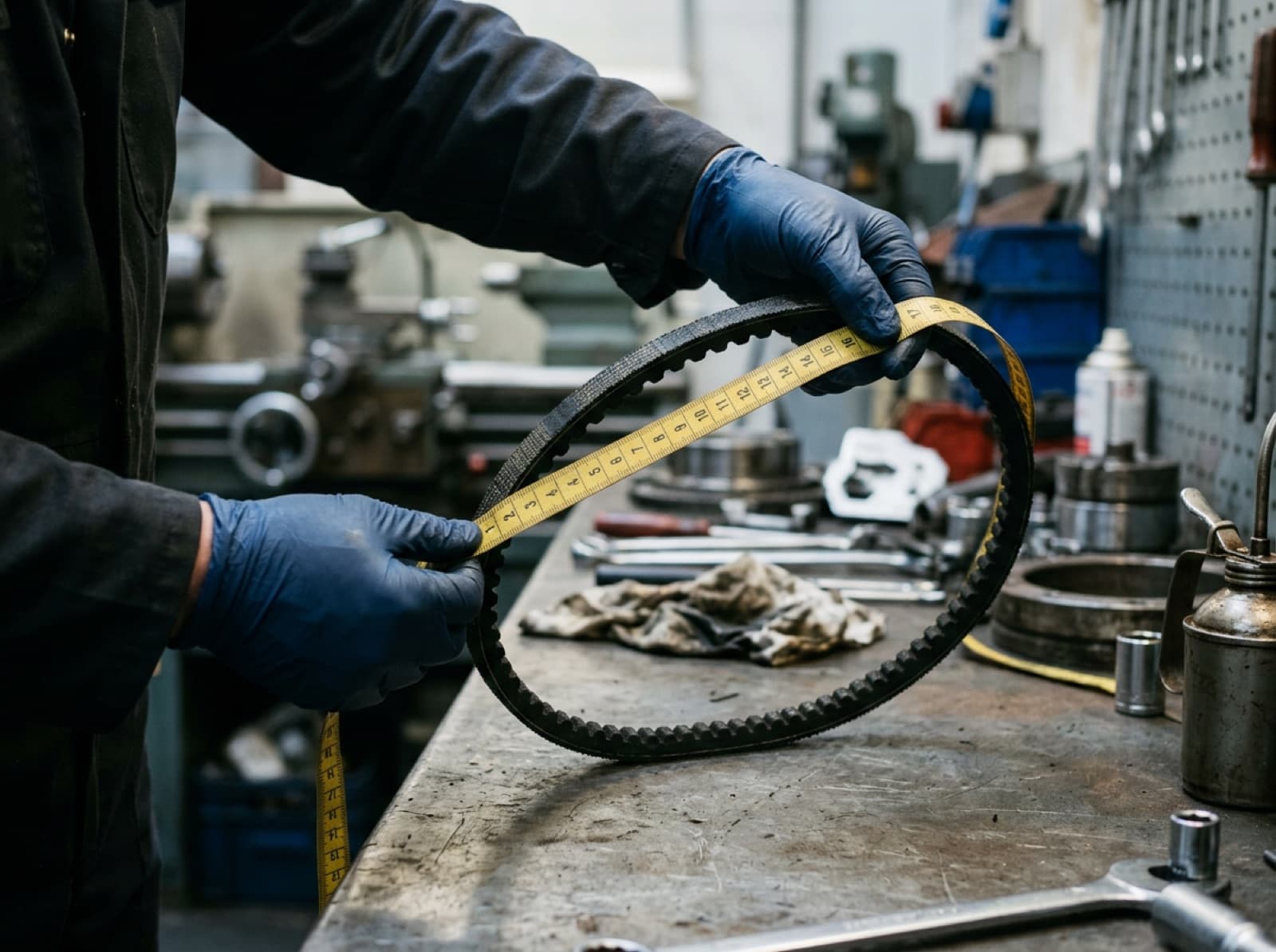
The cord line does the actual work of transmitting tension. Polyester cord is the general-purpose choice. Aramid (para-aramid) cord has a much higher modulus — it stretches far less for the same load — which is why it turns up in duty defined by shock loads and long spans. A belt that barely stretches under a slug of crop keeps its tension, which keeps it from slipping, which keeps it from cooking itself. Cord type is a property of the individual part, not of the LA/LB/LC section code, so confirm it against the belt you are actually buying.
Do not solve a stretch problem with more tension.
The Mitsuboshi agricultural range in this catalogue
UMS Transmission lists the Mitsuboshi agricultural belt range in LA, LB and LC sections. The catalogue name carries more than the size — it also carries the line designation and any construction variant, and those are part of the part number.
| SKU | Catalogue name | Section | Nominal length |
|---|---|---|---|
| MALA029 | Mitsuboshi Agricultural Belt La29 | LA | 29 in |
| MALA135/2 | Mitsuboshi Agricultural Belt 2R/La135 | LA | 135 in |
| MALB031 | Mitsuboshi Agricultural Belt Lb31 | LB | 31 in |
| MALB031C | Mitsuboshi Agricultural Belt Lb31 Cogged | LB | 31 in |
| MALB110 | Mitsuboshi Agricultural Belt Lb110 | LB | 110 in |
| MALB110G | Mitsuboshi Agricultural Belt Lb110 Gold | LB | 110 in |
| MALB134 | Mitsuboshi Agricultural Belt Lb134 New Orange | LB | 134 in |
| MALC140 | Mitsuboshi Agricultural Belt Lc140-6A Gold | LC | 140 in |
Real examples from the UMS agricultural belt catalogue, showing how the naming works.
Read the rows against each other and the pattern is clear. MALB031 and MALB031C are both LB31 sizes — one plain, one cogged. MALB110 and MALB110G are both LB110 sizes on different Mitsuboshi lines. MALA135/2 carries a 2R prefix, marking a banded belt whose strands are joined side by side so they cannot flip out of the groove or load unevenly under shock — a banded belt and a pair of singles are not interchangeable.
The practical rule: when you quote a code, quote all of it. "LB110" on its own describes a size. "MALB110G" describes a belt. The full range sits on the Agricultural Belts category page, and everything UMS lists is searchable from the main product catalogue.
Reading a worn — or wrong — belt
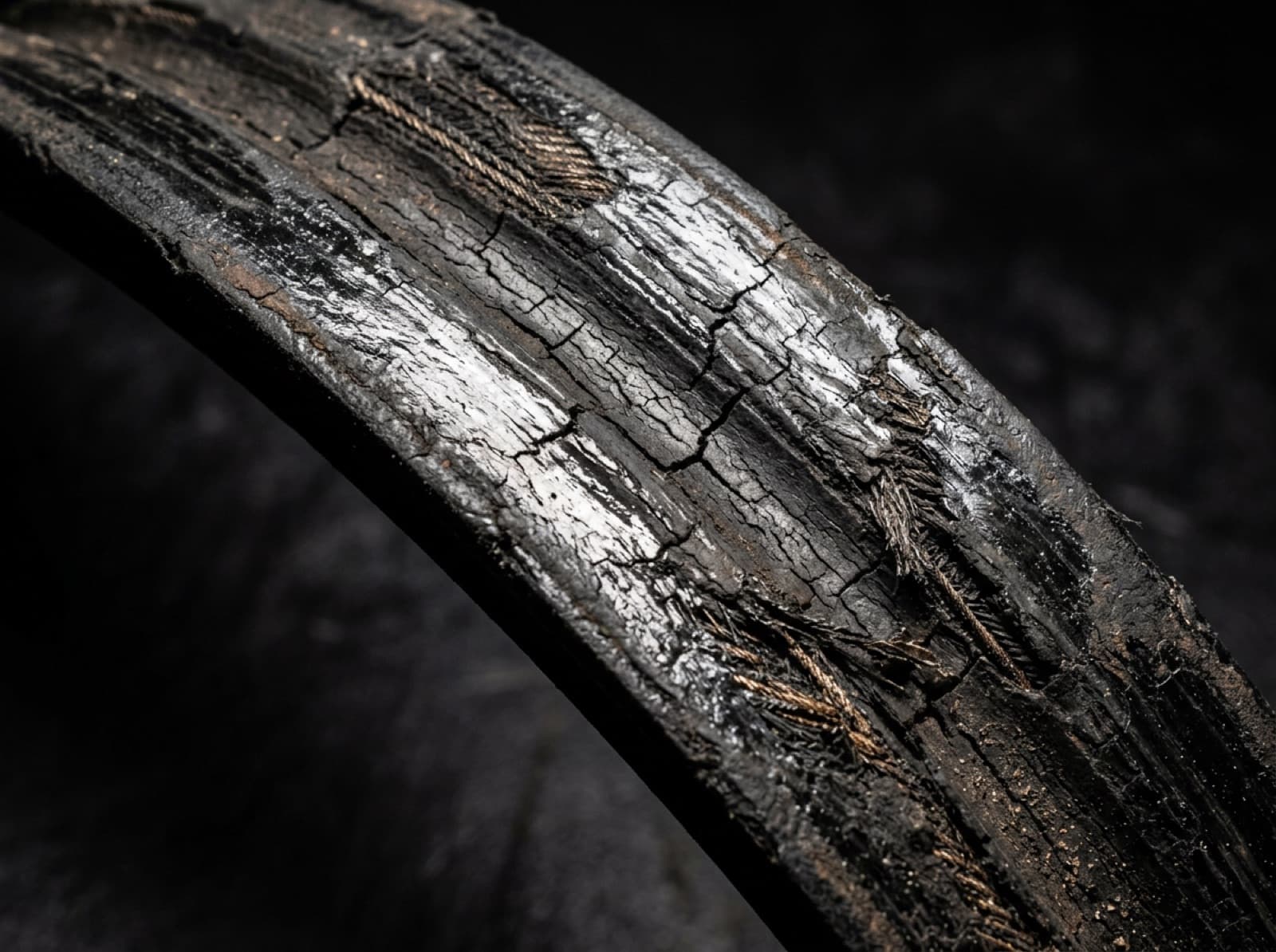
The belt that comes off tells you why it came off. Reading it properly is the difference between replacing a belt and replacing it again in six weeks.
| What you see | What it usually means | What to check |
|---|---|---|
| Glazed, shiny sidewalls | Sustained slip — the belt has been polished against the groove | Tension, clutch idler travel, worn grooves |
| Belt sitting low, touching groove bottom | Worn belt, worn grooves, or both | Groove profile with a gauge or a new belt |
| Cracks across the underside | Flex fatigue — too small a bend radius, or age hardening | Idler diameters, back-side bends, belt age |
| Cover frayed, cord exposed | Abrasion or misalignment rubbing a guard or bracket | Alignment, guards, debris in the drive |
| Swollen, soft or spongy belt | Oil or fuel contamination | Leaking seals and hoses above the drive |
| One belt of a set loose or shredded | Unmatched set, or a single belt replaced on its own | Replace the whole set together |
| Tensioner at the end of its travel | Belt has stretched, or the wrong length is fitted | Measured length against the catalogue size |
| Torn cogs or chunked flanks | Debris driven into the groove, or a shock overload | Groove cleanliness, drive guarding, duty |
Common agricultural belt failure signatures and what they usually point to.
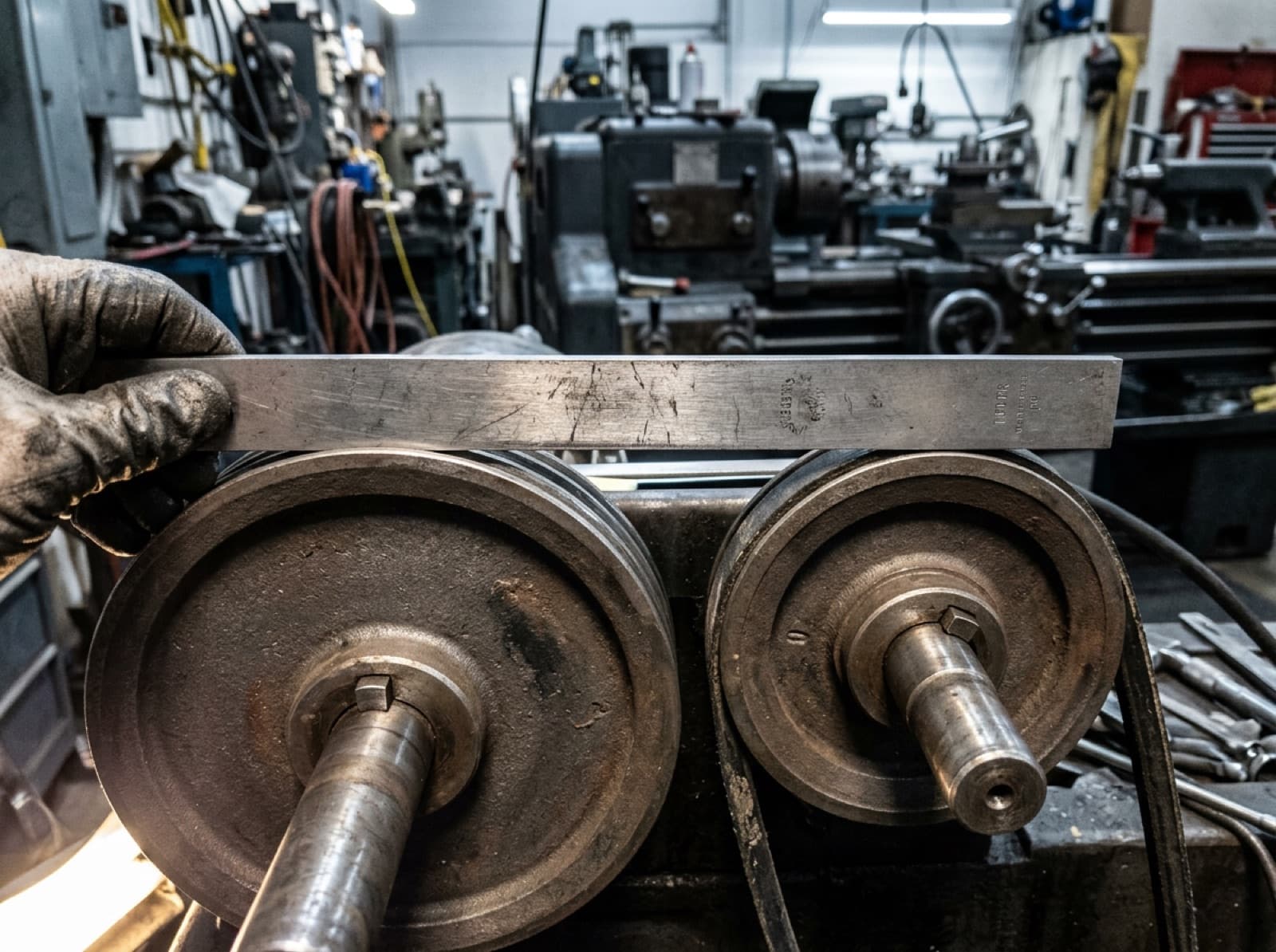
Check the pulleys before you fit anything. A groove worn concave lets a new belt ride down onto the bottom of the groove, where a V-belt has no wedging action at all and simply slips. Fitting a new belt into a worn groove is the most common way to destroy a new belt in a single season. The other pre-fit check is alignment — a drive that is out of line will shred a cover no matter how good the belt is.
Measuring a replacement when the old belt is destroyed
Farm belts rarely fail politely. When there is nothing left to read, you can still get to the right part in two measurements and one photo.
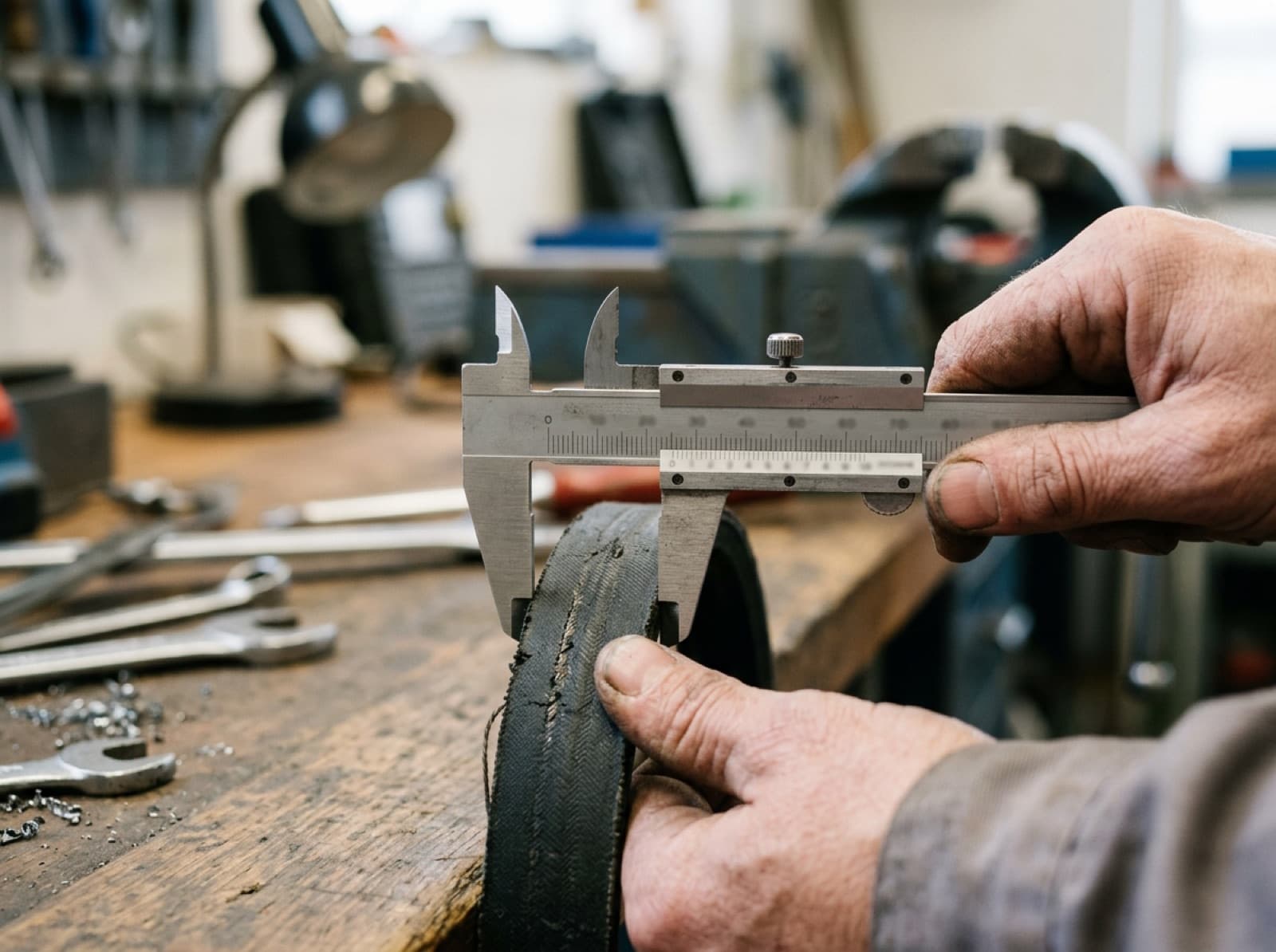
1. Get the section from a clean offcut. Find a piece with an intact cross-section and measure the top width and the depth with calipers. That places you in LA, LB or LC. If the cross-section is chewed everywhere, measure the pulley groove instead — the groove was cut for the belt.
2. Get the length from the drive, not the wreckage. Set the tensioner or idler to the middle of its travel — not fully slack, not fully wound up. Run a tape or a length of non-stretch cord around the exact path the belt takes, over every pulley and idler, following the working face. Note that figure and note that it is a path measurement, not a belt code.
3. Record the drive. Machine make, model and the drive it belongs to (feeder house, reel, fan, pick-up, auger). Photograph the drive with the guards off so the pulley count, the idler positions and any back-side bends are visible. If you have the machine manufacturer's part number, include it — a genuine OEM number is the single strongest identifier you can give.
Measure at mid travel, and say that you did.
Do not convert an old inside-length number into an agricultural pitch length by arithmetic and hope. Send the measured path length and the section, and let the match be confirmed against the catalogue — the size chart guide covers the measuring method in more detail, including how to handle belts you cannot get a tape around.
Frequently asked questions
What do LA, LB and LC actually mean?
In this catalogue the L marks the belt as part of the agricultural range and the letter after it tracks the cross-section family — LA follows A, LB follows B, LC follows C. The number is the nominal length in inches, so an LB110 is an LB-section belt with a 110 inch nominal length. The important catch is the length basis: agricultural sizes are quoted on pitch (effective) length, while classical industrial belts are quoted on inside length. An LB110 and a B110 are therefore not the same belt.
Can I fit an ordinary B-section belt where an LB belt came off?
The cross-sections are related, so it will often physically sit in the groove — but it is not a like-for-like swap. The length basis differs, and a general-purpose industrial belt is not built for clutched engagement, slug loading, back-side idlers and long unsupported spans. If you have to substitute in the middle of harvest, work from a measured length rather than the printed number and expect a shorter life. Then put the correct agricultural belt back on at the next opportunity.
The old belt came off in pieces. What do you need from me?
Four things get it matched: the top width and depth of a clean offcut, a length measured around the pulley path with the tensioner set at mid travel, the machine make and model, and any legible fragment of the old belt code or the machine manufacturer's part number. If the belt is a banded or cogged variant, say so — that changes the part, not just the size.
What do 'Gold', 'New Orange' and 'Cogged' mean in the product names?
They are part of the Mitsuboshi line naming carried through into the catalogue, not size information. Two belts can share the same LB number and still be different belts — MALB110 and MALB110G are both LB110 sizes with different line designations. Quote the full code, including any suffix, when you order or cross-reference.
Does aramid cord make a difference in farm machinery?
Aramid cord has a much higher modulus than polyester, so it stretches less under a shock load and holds tension better across long centre distances — both of which describe most farm drives. Whether a specific belt uses aramid, polyester or another cord is a construction detail of that part, so check the specification for the belt in front of you rather than assuming it from the section code.
How often should agricultural belts be replaced?
There is no fixed hour figure that holds across mowers, headers, balers and augers — duty, tension and exposure vary far too much. Replace on condition, inspect before the season rather than during it, and change belts that run as a matched set together so the load stays shared.
Send us the measurements before the season starts.
Section, path length, machine model and a photo of the drive are enough for us to confirm the Mitsuboshi agricultural part number — LA, LB or LC.